Best Mattress for an Adjustable Base Explained
Not every bed can bend. Here’s how to pick one that flexes and lasts.
So you’re eyeing an adjustable base, and now you’re wondering what bed goes on top. Smart move. Picking the right mattress for adjustable base setups is the one step people get wrong most often. Because if you put a stiff, old-school mattress on a bending frame, it fights back and wears out fast. But grab the right one, and it hugs every curve of the base like it was made for it.
Here at Compare Deals, we help folks match beds to bases every week. So relax, this is easier than it sounds. In this guide we’ll cover which mattress types bend best, what to avoid, and how to snag the right one without paying full price. Let’s get you set up.
Why Not Every Mattress Works
An adjustable base bends in the middle to lift your head and feet. That means your mattress has to bend too, over and over, night after night. A flexible bed handles that just fine. A rigid one cracks, creases, or pops its coils. So the wrong choice can shorten a bed’s life in a hurry.
Here’s the thing, this doesn’t mean adjustable bases are picky monsters. It just means you want a mattress built to move. The good news is that most beds made today are, so you have plenty of great options. Choosing the right mattress for adjustable base use is really about knowing which types flex and which don’t.
The Best Mattress Types for a Base
Some materials were practically born to bend. Here are the top picks:
- Memory foam. Soft, flexible, and quiet. It follows the base perfectly and cradles pressure points. A top choice for most people.
- Latex. Bendy and bouncy with a longer lifespan. Great if you want flex plus a little spring.
- Hybrid. Foam on top with pocketed coils below. The individual coils flex, so it bends far better than an old innerspring. Best of both worlds.
Any of these three will move happily with your base. When you browse our wide range of beds, look for these labels and you’re already on the right track.
What to Avoid
Now the short “skip it” list. Traditional innerspring mattresses with connected coils are the main one to dodge. Those coils are all linked, so they resist bending and can bust when forced. Very thick mattresses over 14 inches can also struggle to fold on a base. So aim for something in the 10 to 13 inch range for the smoothest movement.
Here’s a friendly tip: when in doubt, just ask us. We’ll tell you straight whether a bed is a good mattress for adjustable base use before you buy. No guessing, no surprises.
Firmness and Feel Still Matter
Flexibility is job one, but comfort still counts. A bed that bends but feels wrong won’t make you happy. So think about how you sleep:
Side Sleepers
You’ll likely want a softer to medium feel. It cushions your shoulders and hips while the base lifts you into a cozy position.
Back and Stomach Sleepers
Medium-firm usually wins. It keeps your spine supported even when the base tilts your head or legs up.
The Sleep Foundation notes that matching firmness to your sleep position helps keep your spine aligned, and that stays true on an adjustable base. So pick a bed that both bends and feels right for you.
Getting a Great Price
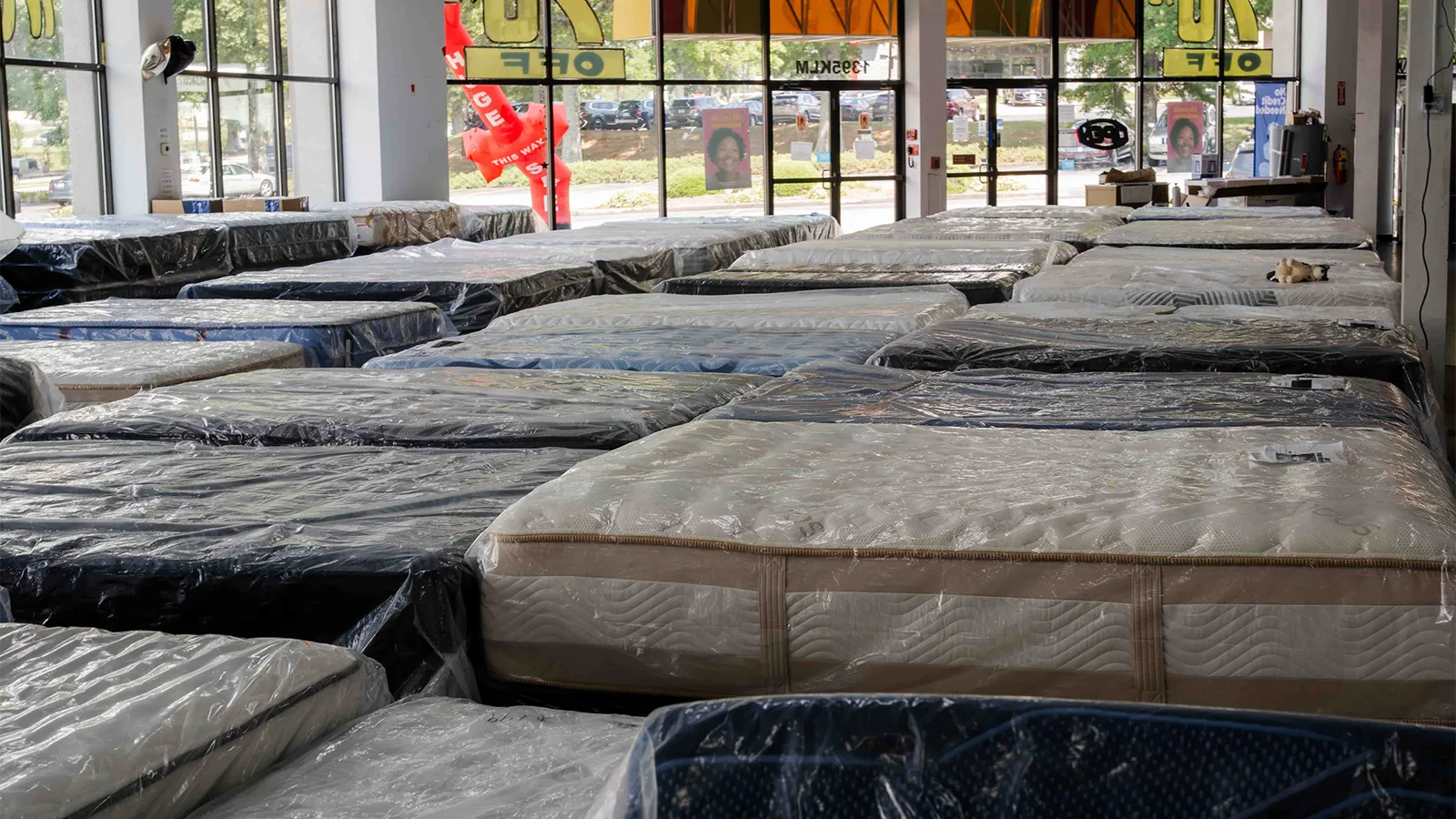
Here’s where it gets fun. Flexible mattresses can carry big price tags at the mall. But at an outlet like ours, you save 60–70% off retail. So the perfect memory foam or hybrid bed for your base costs a fraction of what you’d expect. Our closeout queens start at just $399.
And if you’d rather spread the cost out, no problem. We offer no-credit-needed financing through several partners, so you can take your bed and base home today and pay in small pieces. Check our simple payment options to find a plan that fits. It’s quick, fair, and there’s no scary credit check just to see if you qualify.
Quick Buying Checklist
Before you decide, run through these to land the right bed:
- Pick a flexible type. Memory foam, latex, or hybrid.
- Watch the thickness. Aim for 10 to 13 inches so it folds smoothly.
- Match your sleep style. Softer for side sleepers, medium-firm for back and stomach.
- Ask about warranty. New scratch-and-dent beds carry a 1-year warranty, pre-owned come with 3 months.
Hit those four points and your bed and base will work together like old friends. Nice and simple.
Let’s Find Your Match
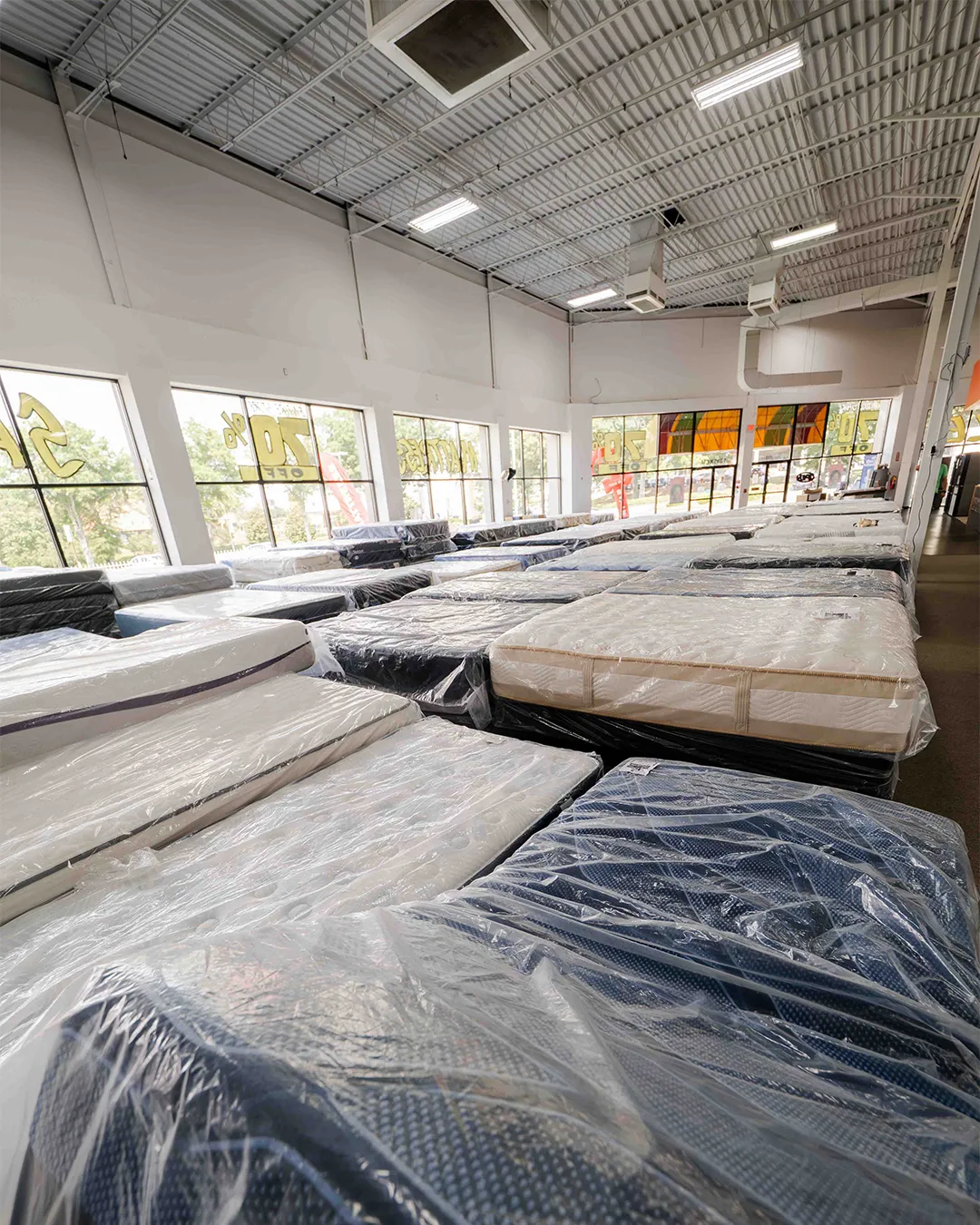
Choosing the right mattress for adjustable base use isn’t tricky once you know the rules. Go flexible, mind the thickness, match your sleep style, and buy smart. The easiest way to be sure? Come try a few beds on an actual base in our store. Feeling it bend under you tells you everything. Stop by and find our Lawrenceville and Morrow stores, and we’ll help you pair the perfect bed with your base.
Common Questions
No, it needs to bend. Memory foam, latex, and hybrid mattresses flex well and work great. Traditional connected-coil innerspring beds resist bending and can wear out or break, so it’s best to avoid those.
Aim for the 10 to 13 inch range. That’s thick enough for comfort but flexible enough to fold smoothly as the base moves. Mattresses over 14 inches can struggle to bend.
Yes, they’re one of the best matches. Memory foam is soft, quiet, and flexible, so it follows the base perfectly and cradles your pressure points at the same time.
Not if you choose a flexible type. Memory foam, latex, and hybrids are built to move and hold up well. Problems only happen with stiff innerspring beds that aren’t made to bend.
Much less than retail. We save you 60-70% off store prices, with closeout queens starting at $399. Plus, no-credit-needed financing lets you take one home today and pay in small pieces.
Pair the Perfect Bed and Base
Save 60–70% off retail on flexible mattresses. No credit needed to get started.