Mattress Sagging Causes: Why Your Bed Dips
That dip in the middle didn’t just happen. Here’s what’s really behind it and how to stop it.
Ever flop into bed and feel like you’re rolling into a valley? You’re dealing with one of the most common bed problems around, and the mattress sagging causes behind it are simpler than you’d guess. Understanding these mattress sagging causes helps you fix the problem or dodge it next time. Good news: most of it comes down to a few easy-to-spot reasons. Let’s break them down so you can stop sinking and start sleeping.
Here’s the thing. Sagging isn’t just annoying. That dip pulls your spine out of line all night, which leads to sore backs and rough mornings. So it’s worth knowing why it happens. Once you know the cause, you can either fix it fast or shop smart for a bed that holds up longer.
Cause One: Normal Wear Over Time
The biggest reason of all is plain old age. Every night, your body presses down on the same spots. Over years, the foam softens and the coils lose their bounce. That’s just physics doing its thing. Nothing lasts forever, and your bed is no exception.
Most mattresses start to show a dip somewhere between 6 and 8 years. Cheaper beds can sag even sooner. So if your mattress is getting up there in age, wear is likely the main culprit. It’s normal, but it’s still a sign the bed is winding down.
Cause Two: Foam Breaking Down
Memory foam and soft comfort layers are cozy, but they wear in ways you can feel. Over time, the foam loses its spring-back. Instead of puffing up after you get out of bed, it stays squished. That leftover dent is called an “impression,” and it’s one of the sneakier mattress sagging causes.
Body heat and moisture speed this up. So does sleeping in the exact same spot every night. The foam right under your hips and shoulders takes the most pounding, which is why the middle sags first.
Cause Three: Weak or Missing Support Underneath
Here’s one people miss all the time. Sometimes the bed isn’t the problem. The thing under it is. A weak box spring, a broken slat, or a frame with gaps can let even a great mattress dip in the middle.
Try this quick check:
- Look under the bed. Are the slats close together and solid, or spaced far apart?
- Press on the base. Does it flex or feel spongy? It shouldn’t.
- Check the center support. Queen and king beds need a leg or bar in the middle. No center support means a guaranteed sag.
Fix the base and sometimes the sag disappears. So before you toss the whole bed, peek underneath first.
Cause Four: Skipping Rotation
Beds wear evenly when you spread the load around. If you never rotate your mattress, one spot takes all the pressure while the rest stays fresh. That creates a deep dip on your side while the other side looks brand new.
Rotating every few months is a tiny habit that pays off big. It won’t undo a worn-out bed, but it slows sagging way down on a healthy one.
A Quick Re-Hook: Not Every Sag Means Toss It
Let’s pause here. Before you write off your bed, remember this: some of the mattress sagging causes are fixable. A bad base, no rotation, or a wobbly frame can all be sorted out cheap. So check those first. But if the foam and coils are simply worn out from years of use, no trick will bring them back. That’s when a fresh bed is the real answer.
How to Slow Down Sagging
Want your next bed to last longer? A few simple moves help a lot:
- Use a solid base. Match your bed to a sturdy foundation with proper center support.
- Rotate it regularly. A quick spin every few months spreads the wear.
- Skip sitting on the edge. Perching on the same spot daily breaks down the sides fast.
- Keep it clean and dry. Moisture speeds up foam breakdown, so use a protector.
For a deeper look at how bed materials hold up over time, the non-profit Sleep Foundation’s guide on mattress wear explains what to expect from different builds. So you can shop with your eyes open.
When It’s Time for a New Bed
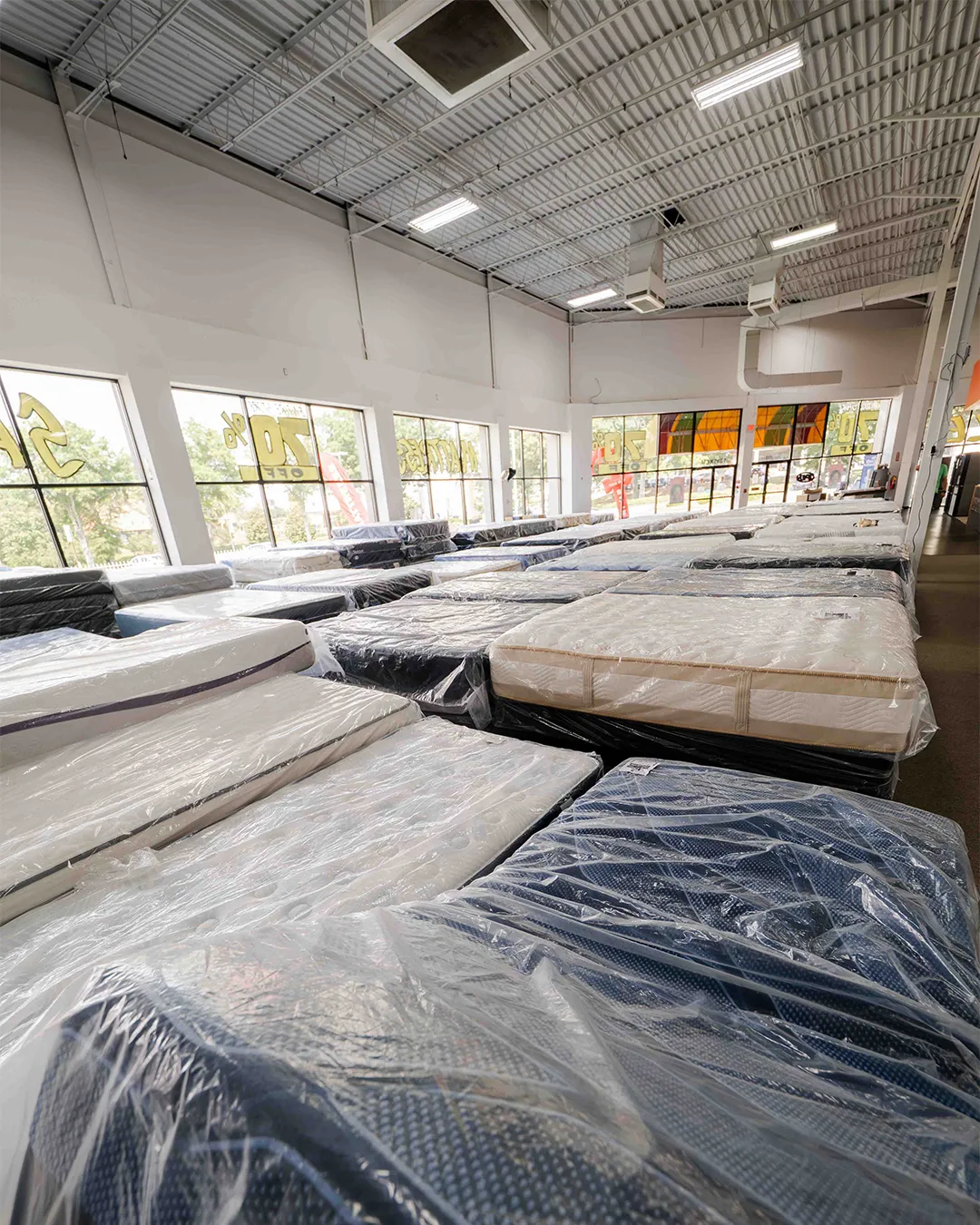
If your mattress has a deep, permanent dip and it’s several years old, the smart move is a replacement. The good news? A new bed doesn’t have to break the bank. At an outlet like ours, you save 60 to 70 percent off retail on closeout and overstock models, with queens starting around $399. Come check out our full lineup of brand-name mattresses in stock and press on each one to feel the support.
Hybrids and quality innersprings tend to resist sagging better than cheap all-foam beds. So it pays to test a few. Our closeout bed selection has plenty of sturdy options that hold their shape night after night.
Worried About the Cost?
Don’t stress about paying all at once. We offer no-credit-needed options through our flexible payment partners like Snap, Acima, and Koalafi. So you can swap that saggy bed today and pay over time. A flat, supportive mattress shouldn’t have to wait.
Come Feel a Bed That Holds Up
Reading about mattress sagging causes only goes so far. The real test is lying down on a fresh, supportive bed. We’ve got sturdy hybrids, innersprings, and foam beds ready to try, plus friendly folks who won’t pressure you. Stop by either of our Metro Atlanta showrooms in Lawrenceville or Morrow, take your time, and find a mattress that stays flat and comfy for years.
Common Questions
The middle sags first because it takes the most pressure from your hips and body weight every night. Over time the foam and coils there wear out. A missing center support under a queen or king bed makes it worse.
Sometimes. If a weak base, broken slat, or lack of center support is the cause, fixing the foundation can help. But if the foam and coils inside are worn out from age, no fix brings them back, and it’s time for a new bed.
Most beds start showing a dip between 6 and 8 years. Cheaper all-foam models can sag sooner. Rotating your bed and using a solid base helps slow it down and keeps the surface even longer.
It can. A worn or weak box spring, or a frame with slats spaced too far apart, lets the mattress dip even if the bed itself is fine. Check the base first before assuming the mattress is done.
Yes. A dip pulls your spine out of alignment all night, so your muscles strain to keep you level. That often leads to stiffness and lower back pain. A flat, supportive bed usually fixes the problem.
Say Goodbye to That Dip
A flat, supportive bed is closer than you think. Save 60 to 70 percent off retail with no credit needed. Come lie down and feel the difference today.